

 By
By Who invented football is a question many people ask and the short answer is: no single person did it alone. But one man, Walter Camp, a player and coach from Yale, is widely called the “Father of American Football.” He took a rough version of rugby and turned it into the sport millions watch every Sunday. This article covers the full story from the very first college football game to the rise of the NFL.
Who Invented Football? The Roots of the Game
The history of American football can be traced back to the mid-1800s. Two popular European sports rugby and soccer (also called association football) traveled to American college campuses, where students mixed them into their own wild version of a ball game. Early school football had almost no formal football rules. It was chaotic, physical, and hugely popular.
The origins of football in America really took shape when colleges started competing against each other. That’s when the need for real structure began.
The First College Football Game: Rutgers vs. Princeton
The first intercollegiate football match the football game between Rutgers and Princeton was played on November 6, 1869, in New Brunswick, New Jersey. Rutgers won that first college football game 6–4. The game was played under rules closer to soccer than to the gridiron football we know today players mostly kicked the ball rather than carried it.
This is where football began in America. But it still wasn’t quite American football yet. That transformation needed one key person.
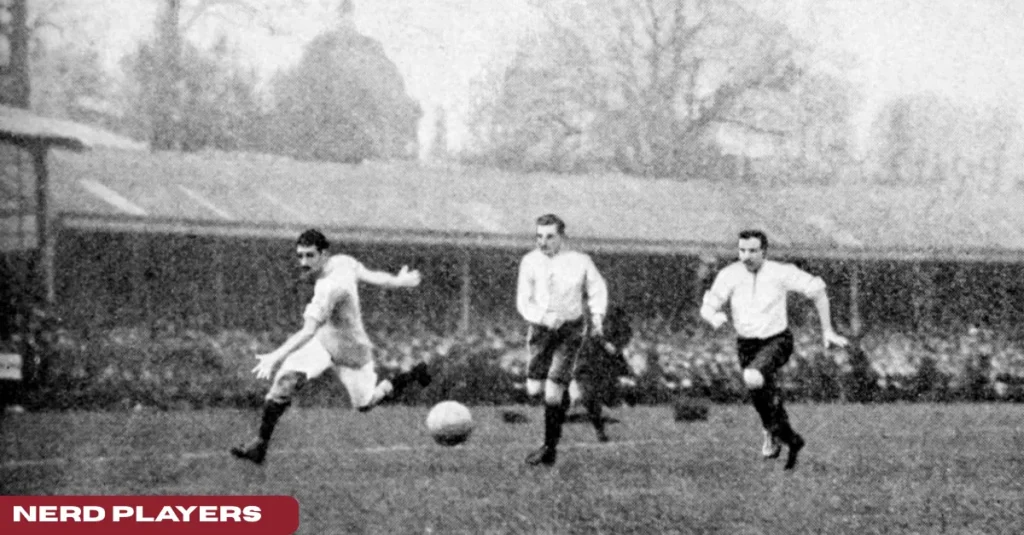
Walter Camp: The Father of American Football
If you want to know who invented American football, the name you need to know is Walter Camp. A football player and later a coach at Yale, Camp worked with the Intercollegiate Football Association to completely reshape the game of football in the 1880s.
Key Rules Walter Camp Introduced
Camp’s changes separated American football from rugby football for good:
- The line of scrimmage — replaced the messy rugby scrum with an organized scrimmage start
- The snap — the center passes the ball back to the quarterback to kick off each play
- Downs and distance — a team had to advance the ball a set number of yards or give up possession
- 11 players per side — trimmed from the 15-man rugby game roster
- A new scoring system — awarding points for touchdowns, field goals, and safeties
These rules for the game gave intercollegiate football structure and strategy it never had before. The line of scrimmage alone changed how every football game was played. Camp also helped define what a ball carrier could do and clarified rules around possession of the ball, making the sport far easier to follow.
Walter Camp’s work at Yale became the foundation for modern American football. The College Football Hall of Fame and the Pro Football Hall of Fame both recognize his enormous contribution to college football history.
Read more: What Does NFC Stand For in Football? A Simple Guide

How American Football Grew Into a Professional Sport
College football exploded in popularity through the late 1800s. Princeton, Yale, Rutgers, and dozens of other schools competed fiercely. Intercollegiate football was the most exciting game played on any campus.
From Campus to the NFL
The push toward professional football grew steadily. In 1920, team owners formed the American Professional Football Association the first real football league for paid players. By 1922, it was renamed the National Football League, the NFL we know today.
The early NFL was modest compared to now. The American Football League later formed as a rival football conference before merging with the NFL in 1970. That merger shaped professional football into the powerhouse it is today. The NFL now runs the most-watched pro football league on the planet, complete with its own football hall of fame the Pro Football Hall of Fame in Canton, Ohio.
How Football Split From Rugby and Soccer
Both rugby football and association football share roots in England. The London Football Association set the football code for soccer in 1863. The Rugby Football Union followed in 1871. American football borrowed more from rugby especially the freedom to run with the ball, carry the ball forward, and tackle opponents.
Over time, Canadian football and Australian rules football (also called Australian football) developed as their own variety of football too. Each is a distinct form of football, but all trace back to the same rugby and soccer origins.
Origins of American Football: A Quick Timeline
| Year | Event |
|---|---|
| 1869 | First college football game between Rutgers and Princeton |
| 1873 | Yale, Princeton, and others form the Intercollegiate Football Association |
| 1880s | Walter Camp introduces the scrimmage, downs, and snap |
| 1892 | First known professional football player is paid to play football |
| 1920 | American Professional Football Association is founded |
| 1922 | Renamed the National Football League (NFL) |
| 1970 | NFL and AFL merge into one league |
The game of American football did not appear overnight. The football history you see above shows a slow, deliberate evolution from a rough rugby-style ball game on college football fields to the polished modern game broadcast to hundreds of millions of fans.
Conclusion
So who invented football? The real answer is that football became what it is through many hands. The game we know today grew from rugby and soccer, was sparked by that famous 1869 match, and was fundamentally built by Walter Camp at Yale. His football rules gave the sport its soul. The NFL turned it into a national obsession. Whether you’re interested in the origins of American football or just want to understand football as we know it, the story starts the same place: a muddy field, two college teams, and a man named Walter Camp who saw something worth perfecting.
FAQs
When and who invented football?
Walter Camp invented it in the 1880s.
Who is called the father of football?
Walter Camp.
What is 🐐 in football?
Greatest Of All Time. Tom Brady.
What is the oldest football club?
Sheffield FC, founded in 1857.