 By
By If you are new to hockey, one of the first things you want to know is how the game is structured. Unlike basketball, which has quarters, or soccer, which has halves, ice hockey is divided into three periods. This simple fact shapes everything about how the sport is played, watched, and loved by millions of fans around the world.
So, how many periods in NHL games are there? The answer is three. But there is so much more to know beyond that basic answer. From overtime rules to playoff drama to the longest game in NHL history, this guide covers everything you need to know about how an NHL game is structured.
How Many Periods in NHL Hockey? The Basic Answer
A standard hockey game consists of three periods, each one 20 minutes long. This means every NHL game has 60 minutes of game time built into regulation play. However, the clock stops every time the referee blows the whistle for offsides, icing, penalties, injuries, and other stoppages. Because of this, the real-world game duration is much longer than 60 minutes.
Here is a quick breakdown of the basic structure:
| Section | Duration |
|---|---|
| Period 1 | 20 minutes |
| First Intermission | 17–18 minutes |
| Period 2 | 20 minutes |
| Second Intermission | 17–18 minutes |
| Period 3 | 20 minutes |
| Overtime (if needed) | 5 min (regular season) / 20 min (playoffs) |
| Total real-world time | ~2.5 to 3 hours |
Games typically last between two and a half to three hours when you include intermissions, TV timeouts, and stoppages. So while the 60 minutes of game time is fixed, the overall game duration stretches much longer.
What Happens in Each of the Three Periods?
Every NHL game is played in three periods, and each one has its own rhythm and strategy.
Period 1 is all about feeling out the opponent. Coaches use the first period to see how the other team is playing, test different line matchups, and avoid taking unnecessary risks. Teams try to get on the scoreboard early without leaving their defensive zone exposed.
The second period is often considered the most important. Teams switch ends twice during this period, and it is the longest stretch of continuous play in terms of strategy. Many coaches say the second period is where games are won or lost, because momentum swings here can be decisive.
Period 3 is where things get intense. If a team is losing, they push hard to tie the score. If they are leading, they focus on protecting it. Clutch goals, empty-net finishes, and last-minute drama all happen here.
How Long Does an NHL Game Last?
The game lasts much longer than the 60 minutes on the clock. Here is why:
- The clock stops every time play is whistled dead
- There are two intermissions, each roughly 17–18 minutes
- TV broadcasts include commercial timeouts
- Penalty shots, video reviews, and injuries add extra time
On average, an NHL game goes about 2 hours and 30 minutes to 3 hours in real time. Playoff games can go even longer, especially when they go into overtime.
NHL Overtime Rules: What Happens When the Game Is Tied
When the game is tied after regulation, the action does not stop. This is where overtime in hockey adds one of the most exciting layers of the sport.
NHL Regular Season Overtime Rules
In the NHL regular season, if the score is tied at the end of three regulation periods, the game moves to a 5-minute overtime period. This overtime is played 3-on-3, meaning only three players on the ice per team instead of the usual five. This wide-open format creates tons of space and leads to fast, exciting chances.
Here is what makes 3-on-3 overtime so thrilling:
- More open ice means more breakaways and odd-man rushes
- Games often end within the first two minutes
- Coaches must pick their best skating and offensive players
- One mistake can end the game immediately
If the game remains tied after the 5-minute overtime, the game goes to a shootout.
Read more: How Long Is a Hockey Game? The Best Game Length Guide for Hockey Fans
What Is a Shootout?
The shootout is a skills competition used only in the NHL regular season to decide tied games after overtime. Each team picks three shooters who take turns skating in alone on the goalie. The team that scores more of their attempts wins.
Shootout rules at a glance:
- Each team gets 3 shooters in the first round
- If still tied after 3 rounds, it becomes sudden death one shooter per team until someone scores and the other misses
- The winning team scores one goal in the standings (recorded as a shootout win)
- Goaltenders can be switched between rounds
The shootout was introduced in the 2005–06 season and was designed to eliminate ties from the regular season games. It remains controversial among hardcore fans who prefer pure hockey to decide games, but casual viewers tend to love the drama.
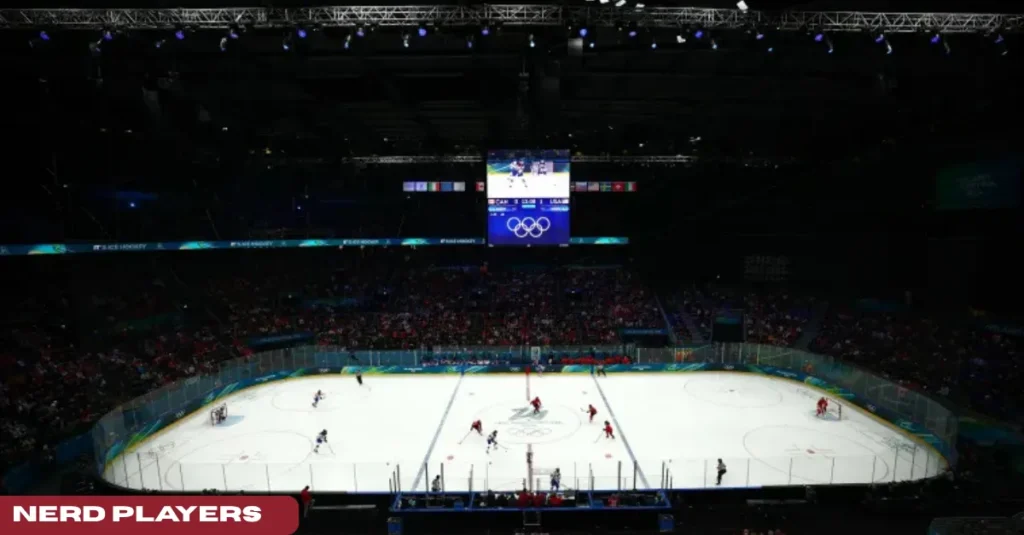
NHL Playoff Overtime — A Completely Different Beast
Playoff overtime is one of the most intense experiences in all of professional sports. The NHL playoff format throws out the shootout entirely. There is no 3-on-3. There is no time limit.
In the Stanley Cup Playoffs, if the game is tied after three regulation periods, teams play full 20-minute periods of 5-on-5 hockey until someone scores. This is called sudden-death overtime, and it can go on for as long as it takes.
Key differences between regular season and playoff overtime:
| Feature | Regular Season | Playoffs |
|---|---|---|
| Format | 3-on-3 | 5-on-5 |
| Length | 5 minutes | 20 minutes per OT period |
| Shootout? | Yes (if needed) | No |
| Ends when? | Goal or shootout | Goal only |
| Multiple OT periods? | No | Yes as many as needed |
In playoff hockey, teams play multiple overtime periods if needed. The game ends only when a team scores. This is sudden-death overtime at its purest one goal, and the series shifts entirely.
The Longest Game in NHL History
If you want proof that playoff overtime can go to extreme lengths, look no further than the longest NHL game ever played.
March 24–25, 1936 : Detroit Red Wings vs. Montreal Maroons
This is the longest game in NHL history, and it is almost unbelievable by modern standards. The game lasted 116 minutes and 30 seconds of overtime meaning the players skated through nearly six full overtime periods before the game ended.
Key facts about the longest NHL game:
- Date: March 24–25, 1936
- Teams: Detroit Red Wings vs. Montreal Maroons
- Overtime played: 116 minutes and 30 seconds
- Game ended: Mud Bruneteau scored for Detroit in the sixth overtime period
- Total ice time: Over 176 minutes of actual play
The goalies played the entire game. Players skated without the modern conditioning support teams have today. It remains a monument to endurance in NHL history.
How Many Periods in Hockey Across Different Leagues?
Many people assume all hockey leagues use the same format. Most do use three 20-minute periods, but the overtime rules vary quite a bit.
College Hockey
College hockey follows the same three-period, 60-minute regulation format. However, overtime in the regular season is a 5-minute, 3-on-3 period and if still tied, the game ends in a draw. In the NCAA tournament, teams play full 20-minute sudden-death overtime periods similar to the NHL playoffs.
Youth Hockey
Youth hockey leagues often use shorter periods commonly 12 or 15 minutes to keep game time manageable for younger players and smaller arenas. The structure remains three periods, but the pace and physicality are very different.
International and Olympic Hockey
The national hockey league format of three periods is mirrored in international play. IIHF games also use three periods of 20 minutes. However, Olympic hockey uses a 20-minute sudden-death period in knockout rounds followed by a shootout if needed, similar to the NHL regular season model.
How Different Leagues Compare:
| League | Period Length | OT Format |
|---|---|---|
| NHL | 20 minutes | 5-min 3v3, then shootout (regular season) / Full 20-min periods (playoffs) |
| College Hockey | 20 minutes | 5-min 3v3, tie allowed (regular) / Full 20-min OT (tourney) |
| Youth Hockey | 12–15 minutes | Varies by age group |
| IIHF/Olympics | 20 minutes | 5-min OT + shootout |
Why Does Hockey Use Three Periods?
This is a question every hockey fan eventually asks. Why not two halves like soccer, or four quarters like basketball?
The answer goes back to the early days of the sport. When hockey was first played indoors in the early 1900s, the ice surface would get badly cut up after 20 minutes of skating. Resurfacing the ice between periods kept the surface safe and fast. Three periods meant two resurfacings and the format stuck.
Over time, the three-period format became central to the flow of the game. Teams needed to regroup, adjust strategies, and manage player fatigue across the three stoppages. Today, the game consists of three periods not just out of tradition, but because it genuinely works well for 5-on-5 hockey strategy.
NHL Points System: How Overtime Affects the Standings
One important thing every fan should know is how overtime rules affect the NHL regular season standings.
| Result | Winner Gets | Loser Gets |
|---|---|---|
| Regulation Win | 2 points | 0 points |
| Overtime/Shootout Win | 2 points | 1 point |
| Overtime/Shootout Loss | — | 1 point (loser point) |
The “loser point” awarded to any team that game goes to overtime is one of the most debated rules in hockey. Critics argue it artificially inflates scores and rewards teams for simply surviving to overtime. Supporters say it makes late-season races more exciting since more teams stay in contention longer.
Quick Facts Every Hockey Fan Should Know
Here are some fast facts about how many periods in hockey and how the game works:
- An NHL game consist of three 20-minute periods of regulation play
- Total minutes of game time in regulation = 60 minutes
- Three regulation periods are always played, even if one team is far ahead
- Overtime in the playoffs uses 20-minute sudden-death overtime periods with no limit
- The shootout only happens in the regular season, never in playoffs
- The longest NHL game lasted over 176 total minutes of play
- Overtime periods until someone scores is the playoff rule no exceptions
- Game play officially begins with a face-off at center ice
Conclusion
So, how many periods in hockey does a standard NHL game have? Three always three. A hockey game consists of three 20-minute periods of regulation, totaling 60 minutes of official play. But as you now know, the structure goes far deeper than that.
From the nail-biting drama of playoff overtime to the skills showcase of the shootout, from the game moves of a tied third period to the history of the longest game in NHL history, the period structure of hockey is what gives the sport its unique identity. Whether you are watching a tight nhl game in October or a playoff game in June, these three periods and whatever comes after are where history is made.
Hockey is not just a game. It is 60 minutes of intensity, strategy, and passion, broken into three perfectly designed chapters.
FAQs
Is NHL 3 or 4 Periods?
3 periods.
What Are the 5 Basic Rules of Hockey?
- Offsides
- Icing
- Penalties
- Face-offs
- No goalie interference
How Long Is an NHL Period?
20 minutes.
How Are Periods in NHL?
3 periods, 20 minutes each, 60 minutes total.